The History of the Harcourt Street Baptists
By Louis E. Deens
Early History
There is reason to believe that when Cromwell’s troops arrived in Ireland in the mid 1640’s they found some Baptists already established there. Not much is known of those pioneers, who they were, whence or why they had come. It is certain though that their number and their influence were both considerably increased by the advent of the new army which included many Baptists amongst its leading men. Since then there had always been a Baptist church in Dublin when our story opens in 1887.
In that year the church was a very small and struggling one. It had known better days. From time to time it had been served by out-standing men who subsequently won world recognition for their gifts, but it was now without a pastor. The congregation had been reduced to thirty, and it worshipped in a very neglected building in Lower Abbey Street in the centre of the city. It looked as if its days were numbered, that after two centuries, the Baptist testimony would die out. In the providence of God, however, this was not to be.
Abbey Street Baptist Church
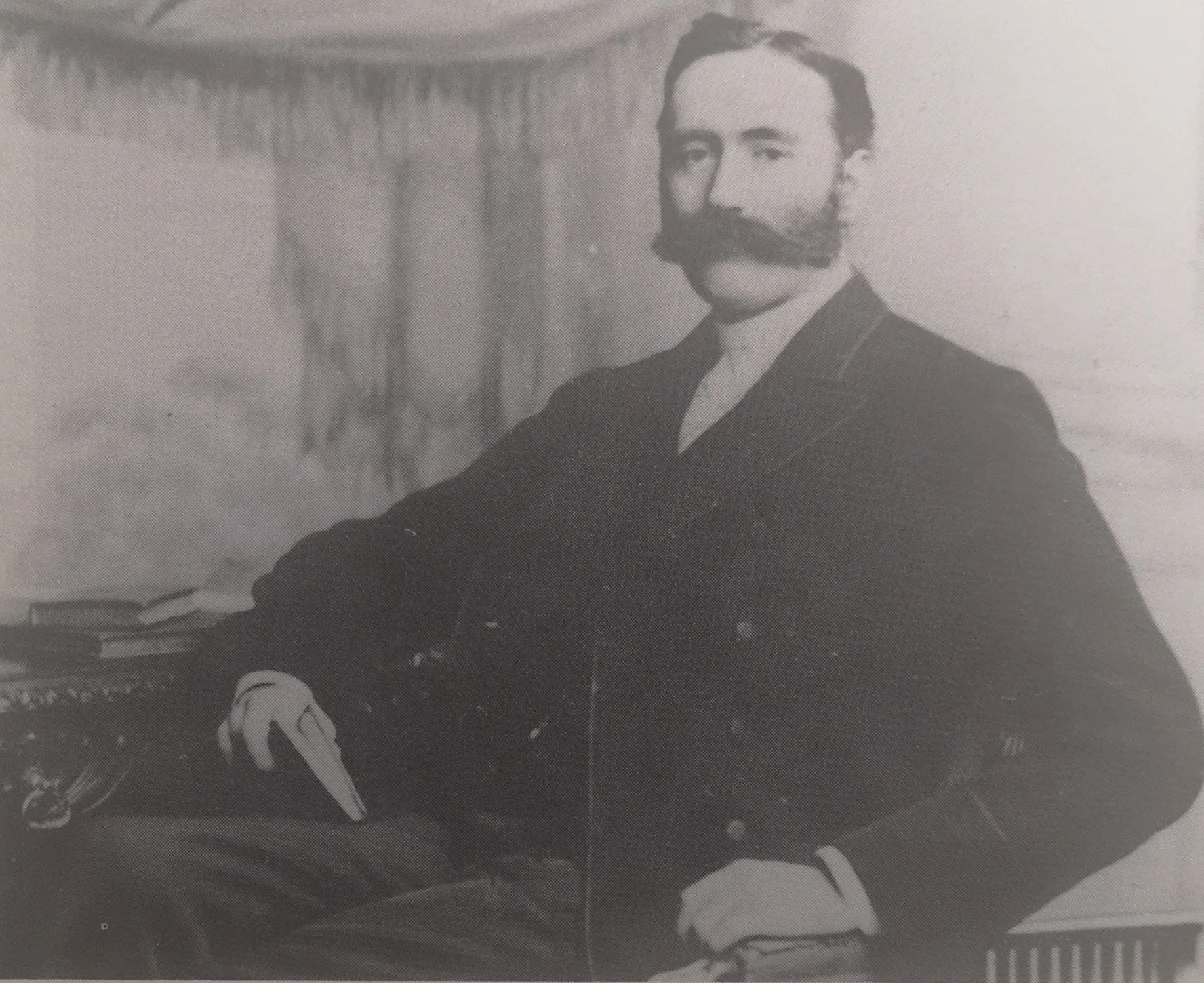
A young man began to attend the services. He was Hugh Dunlop Brown, a graduate of Trinity College, and a barrister-at-law, the son of wealthy parents who were Episcopalians, but of strong evangelical traditions and convictions. He had recently been led to Christ by an older brother, and the new, close, study of the Scriptures into which this had led him had shown him, amongst other things, that infant baptism could not be justified from the New Testament. The subjects, and the method, of the ordinance were both wrong. Convinced of this he felt that he could not conscientiously remain in the Church of Ireland, but must identify himself with those who practised the immersion of the believers. After a brief period with the Brethren he visited the Abbey Street Church. The members there were quick to recognise his worth. They invited him to accept responsibility for the preaching, and his ministry was so much appreciated, and the congregations so greatly increased, that after three years, in 1884, he was formally invited to accept the pastorate. This he did, and a contemporary account in the Irish Baptist magazine records that he through himself into the work with such enthusiasm that the Chapel was quickly renovated and beautified, a new American organ provided, and the service of praise enlivened. The attendances continued to grow until the obvious inadequacies of the building compelled the Pastor to recommend to the church that it seek a new site suitable for the erection of a more modern building, more convenient to the south side of the city where most of the members resided. His recommendation was accepted and acted upon, with the result that ( to quote again from the Irish Baptist magazine of that time)
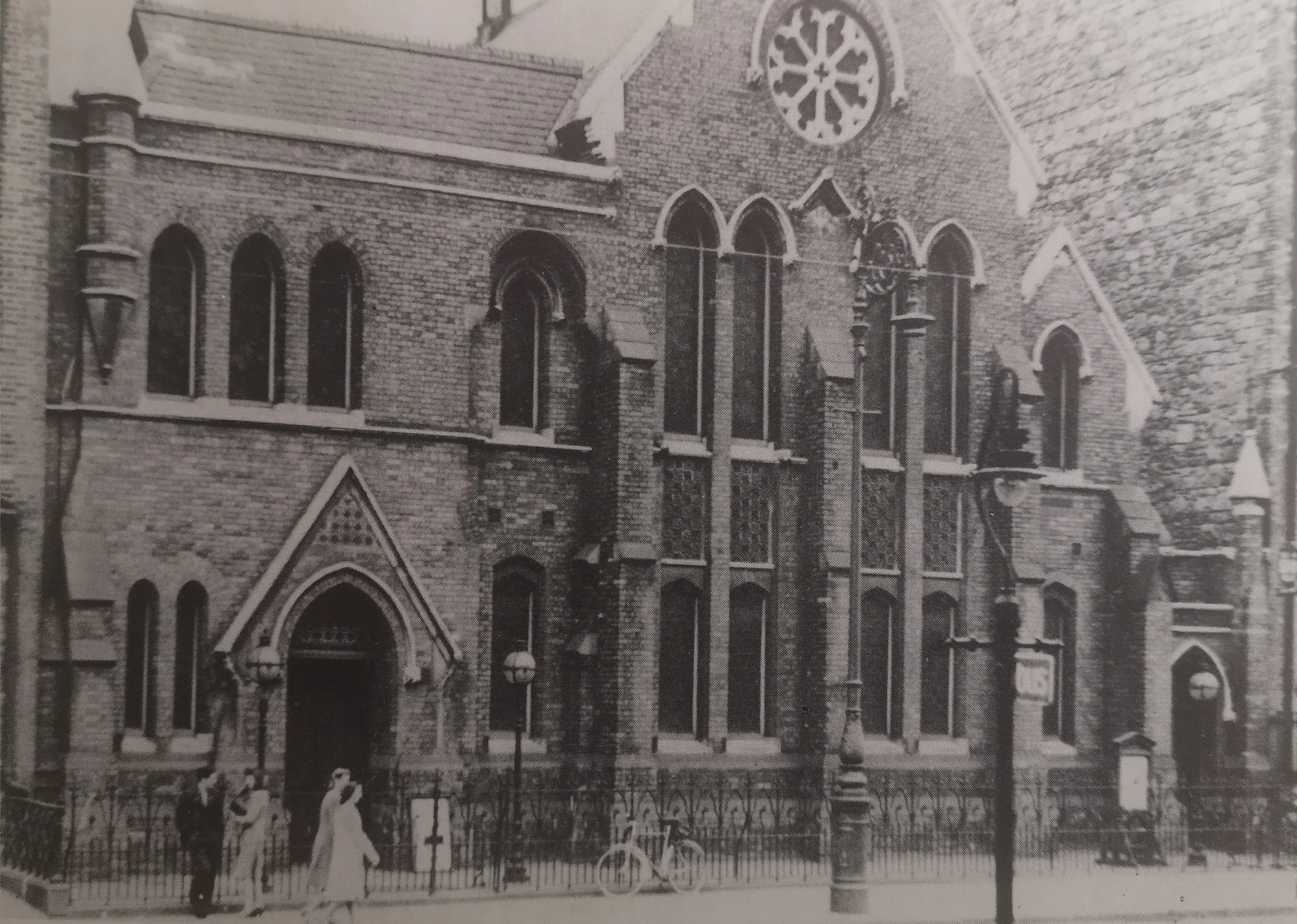
By a remarkable series of providential steps a most eligible site was at length secured in Harcourt Street, the main thoroughfare between the city on one side and the fashionable suburbs of Rathmines and Rathgar on the other.
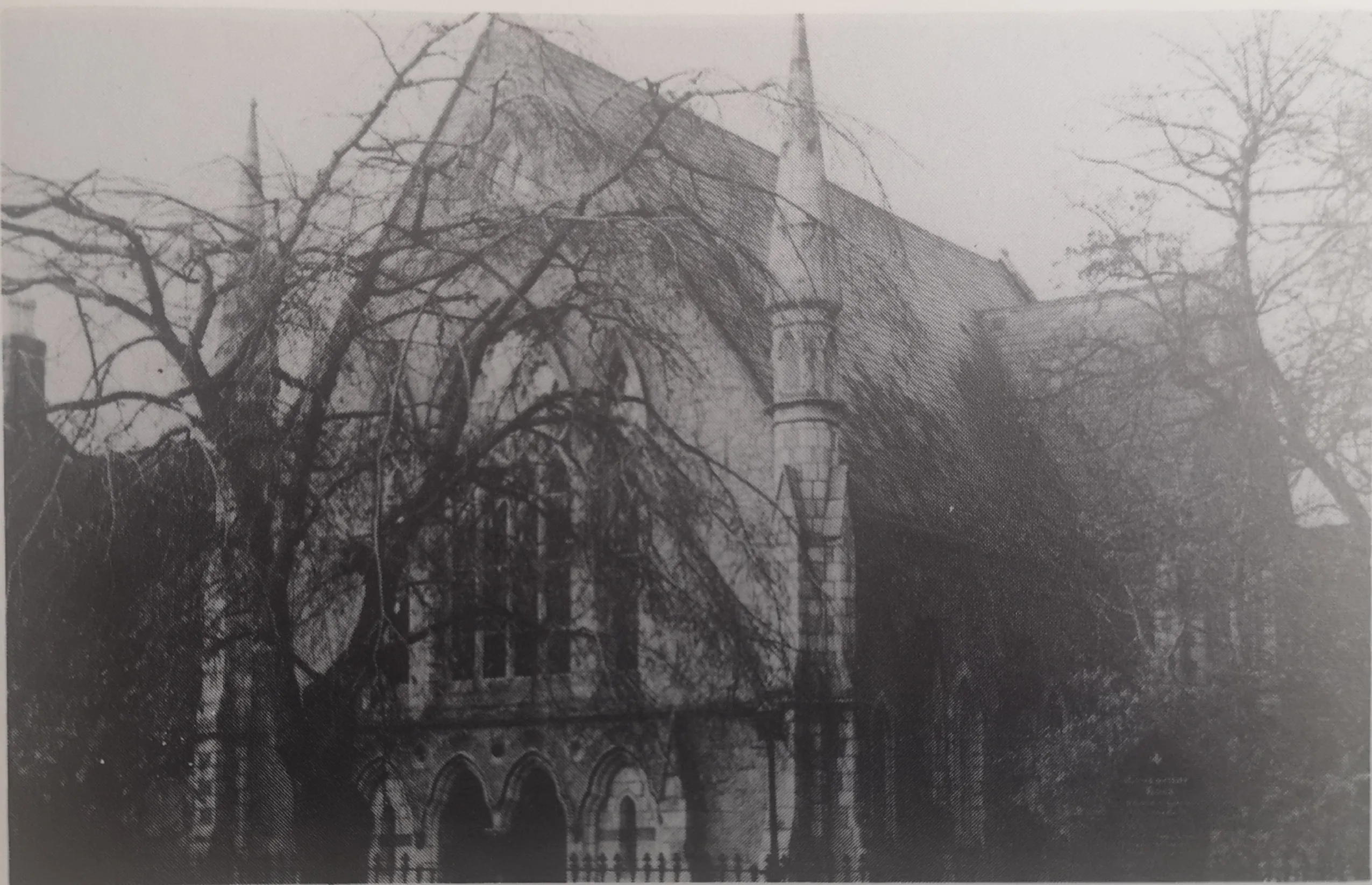
Harcourt Street Baptist Church
The foundation stone of the new chapel was laid on April 26th, 1887 by Mrs. Brown, the Pastor’s widowed mother. It was she who generously met the total cost of the new building, over six thousand pounds, a very substantial sum of money in those days. The opening services began with a public meeting on November 11th of the same year and continued to the 23rd of the month, with evangelistic addresses and Bible Readings by prominent evangelical preachers from Great Britain.
For a detailed description of the completed building we are again indebted to the source from which we have already quoted twice:
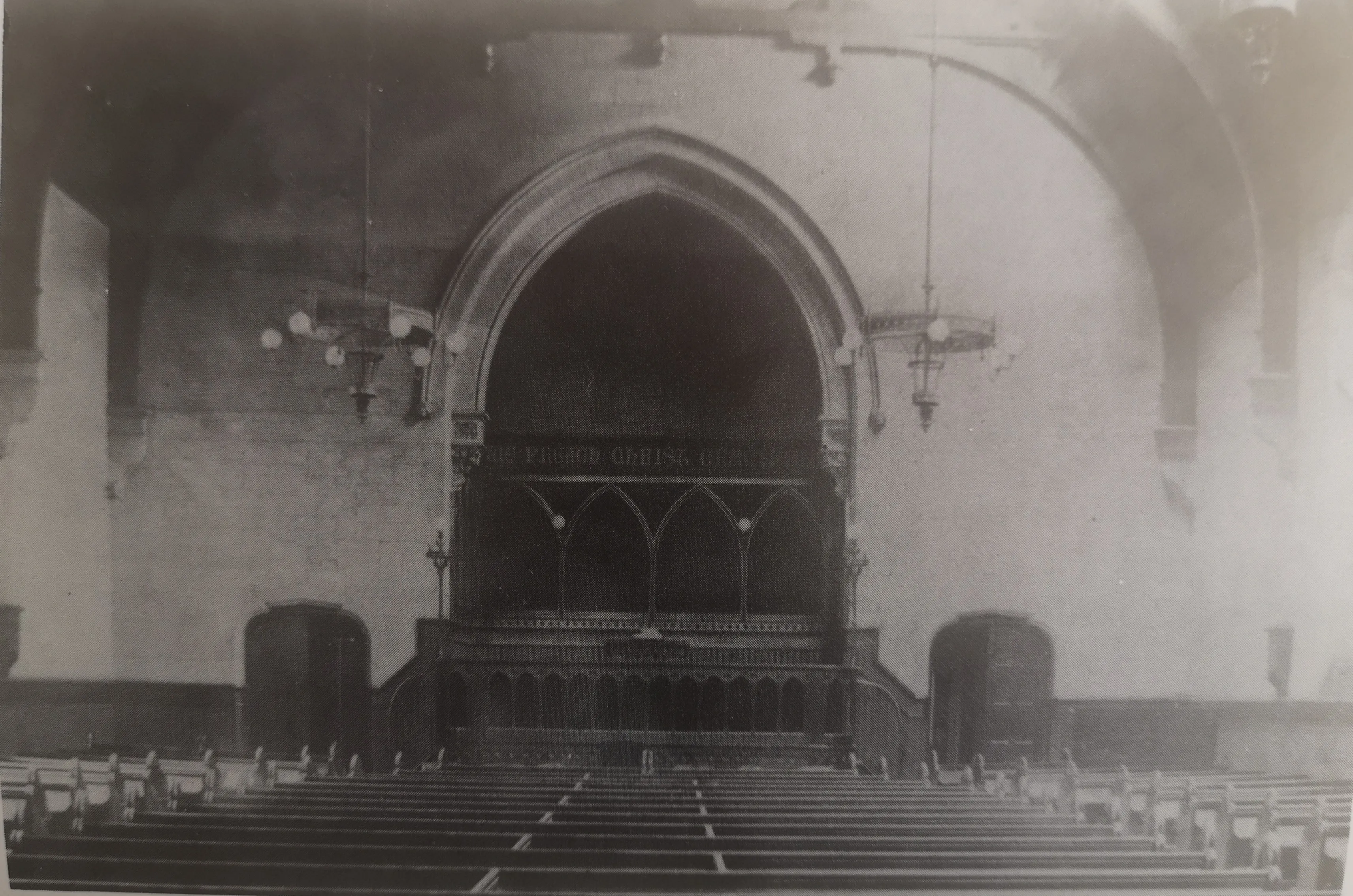
The building is a model of artistic design and graceful proportion. It compromised a main building and gallery, with accommodation for about 500, a front lecture-room, a read lecture-room, vestries for pastor and elders, a ladies’ common room, and apartments for the caretaker. The front lecture-room separates the main building from the street and will effectually prevent interruption which might be caused by noise outside. With the same object there are double windows throughout the building. The roof is of open timber, supported by graceful arched ribs, resting on carved Bath stone corbals. The principal timbers used in the joinery work are pitch pine, Californian red wood and Norway firs. The Baptistery is formed of white enamelled tiles, and the steps leading down to it being of Portland stone. An arrangement of revolving shutters admits of the exclusion from or the inclusion within the main building of the front lecture-room, and by this means accommodation is provided for about 300 people. The windows are of tinted Cathedral plate, and, when lighted up at night, present a most attractive appearance. The walls are of red brick, with granite and terra cotta dressings. The front of the building stands back about eight feet from the pavement, the intervening space being enclosed by a wrought iron railing. There are two main entrances from Harcourt Street, and also an entrance in the rear from Charlotte Street, which runs parallel to the main thoroughfare. The chapel is cushioned throughout in crimson velvet pile, and all the fittings are of a superior description. Its acoustic properties are excellent.
Constitution
The Harcourt Street Baptist Church was formally constituted at the first church meeting which was held in the chapel a week prior to the opening services. This meeting was attended by 19 brethren and 19 sisters who all subscribed to this Constitution and Basis of Doctrine:-
We, the undersigned, saved through grace and immersed into the likeness of Christ’s death and resurrection, do hereby unite together in church fellowship so that, as a holy brotherhood, we may advance the truth of God, proclaim the riches of His Sovereign mercy to the lost and perishing, and help, by sympathy and counsel, one another in the Christlike and Heavenly life. We solemnly undertake, by the Spirit’s aid, to bear one another’s burdens, and in the exercise of a tender-hearted, tolerant, forgiving, kindliness, to avoid everything of harsh and ungenerous criticism, recognizing in each other fellow members of that mystical Body of which our Risen Saviour is the Head. We seek to maintain a primitive simplicity, purity of worship and communion, regarding it as an essential feature in the teaching of Jesus Christ that redeemed souls should walk in newness of life and holy separation from the world and invite only to the Lord’s Table those whose sins are forgiven through the Blood of Jesus, and whose lives are in harmony with that great truth.
While desiring to extend to all believers the fullest and freest liberty of conscience we yet expect from all church members adhesion to the following doctrines of the faith as understood in a simple, straight forward, and evangelical sense:-
The Inspiration and all sufficiency of Holy Scripture
The Trinity in Unity of the Godhead
The Fall of man through Sin
The perfect Divinity and perfect humanity of our Saviour
The Justification of the sinner through faith in the Lord Jesus
The Atonement through the blood shedding of the Lord Jesus Christ
The personality of the devil
The Resurrection of the Body
The Immortality of the Soul
The Everlasting Security of the believer
The Everlasting Punishment of those who die impenitent
The perpetuity of the ordinances of Baptism and Breaking of Bread
The obligation resting on all saved souls to live soberly, godly, and righteously in this present world.
Whilst repudiating in the strongest possible way any conception of an exclusive ministry we yet distinctly assert our conviction that order and office are both essential and scriptural; and, while recognising most fully that God alone can qualify or ordain, we yet hold that a practical recognition of a brother’s suitability for office on the part of the church members is necessary before he occupies such a position, and to this principle we expect an assent from all incoming members.
We believe and gladly recognize that the labourer is worthy of his hire.
We believe that elders and deacons existed in the New Testament church.
While loving all Christians as such we cannot admit to church membership any unbaptized believers, or anyone holding that sinless perfection is attainable in the flesh.
We hold strongly to the personal and pre-millenial advent of the Lord Jesus, but do not demand an assent to this as a pre-requisite for membership.
We desire to live in harmony with all followers of our common Lord, and hope that the establishment of His church may tend alone to the furtherance of His glory, the edification and comfort of the Lord’s dear people, the salvation of the lost, and the overthrow of unholiness and error, and, looking up to God alone for strength and blessing, we pledge ourselves solemnly to work together each according to his or her personal ability, for the attainment of these objects in love and brotherhood of thought and speech
This document was then signed by all present, and following on this a formal invitation was extended to Mr Brown to become the Pastor of the new church. This he accepted, and the members then proceeded to elect four elders and three deacons from amongst themselves. It was one of the characteristics of this pastor that all through his ministry he strongly insisted on the necessity for and the importance of these offices in the life of a church. When, later, the membership of the church had greatly increased, the number of elders rose to double figures, and many of these sat with the Pastor on the platform as he conducted the Sunday Services. As already mentioned, he had earlier felt a drawing towards the Brethren, and he always maintained that it was there he learned how essential these offices are.
One other item of business remained to be dealt with at this meeting. A letter from the Pastor was read:-
Dear Friends,
I have much pleasure in offering you the free use of Harcourt Street Chapel for three years from the present date on the simple conditions that the Basis of Doctrine entered in the Minute Book of the Church be observed, and that the Head Rent, taxes, and annual premium of fire insurance, be paid for by you.
The head rent is paid up to Dec. 31 and amounts for 1888 to £14.10s. and £29 per annum subsequently. The Fire Insurance premium is paid up to Dec. 1888.
With Christian regards, and earnest prayer that God may be glorified and sinners blessed.
Needless to say, the members gratefully accepted this offer, and warmly thanked Mr. Brown for his generosity.
Such was the modest beginning of Harcourt Street Baptist Church.
Early Days of the Church
The Pastorate thus begun continued for slightly over thirty years, and was richly owned and blessed by God. Conditions in Dublin at that time were of course very different from what they are today. Queen Victoria was still on the throne during the opening years of the period, and the standards of her day are openly derided today. Hers was a conventional and conformist age, ours is a rebellious and permissive one. People still went to church in large numbers in those days, and Sunday evening congregations were generally larger then, and different from, the morning ones.
Today most denominations report diminishing membership and much reduced congregations. Modernism was virtually unknown then in most church circles. It was only making its appearance on the horizon. Today it has established itself firmly in many churches, and has succeeded in ousting the Gospel from many pulpits. Conditions such as those which prevailed towards the end of the nineteenth century would seem to us, almost a century later, to provide a very favourable climate for Christian work, and this they certainly did to some extent, but this does not suffice to explain the truly remarkable growth of the infant church during the next few years. In the first year over 60 were baptized, and the additions to the membership, many of whom came from paedo-baptise denominations, were of all orders of society, including many leading citizens in the fields of commerce, industry, medicine, and law. In 1889, two years after the formation of the church, the membership had trebled. In 1902, thirteen years later, the Annual Report showed a total of almost 400 baptized believers on the rolls. Twenty-seven of these had been baptized during the year just ended, bringing the total number of baptisms since the chapel opened to 659. In 1904 the membership figure had passed the 400 mark, representing 257 families, and it continued somewhere about this figure for the next ten years.
How is this exceptional growth and progress to be accounted for? Since the favourable social conditions are not a sufficient explanation to what can it be attributed? In a letter which was written in 1904 the Pastor himself attributed it to the grace of God and the loyal support of his members. He put the sovereign grace of God first because none knew better than he that ‘Except the Lord build the house the labour in vain that build it’, that ‘Paul may plant and Apollos may water but God giveth the increase!’ But, Calvinist though he was, he also knew that human instrumentality had its part to play in the work of God, and, as one writer said of his ministry in Lower Abbey Street ‘he had the gift of awakening the dormant energies of his fellow members’. The list of the activities of those members both within and without the chapel in Harcourt Street during the years under review is an impressive one, as one of the Annual Reports at the turn of the century will show. It incorporates accounts of the work of the Sunday School, of a Sunday evening meeting for soldiers, of a Thursday evening meeting for young women, and a fortnightly meeting for young men, or work carried on in four out stations, Lusk, Dundrum, Whorton Hall in Harolds Cross, and in a little chapel in Lower Gardiner Street. This latter building was located in a tenement house district, not far removed from a notorious red-light quarter. Sunday services were held here, and some weeknight meetings. This chapel was later sold. It passed into the hands of the Seventh-day Adventists, but more recently was destroyed with a number of other buildings as part of a reconstruction scheme carried out by the Dublin Corporation. The same Annual Report also included a report from the Harcourt Street Evangelization Society which, at one point in its history, employed three evangelists who were available to conduct missions wherever opportunity was offered them for tent or other meetings. Another Report was from the Dorcas Society. This was a group of lady members who held an afternoon meeting once a week at which help of various kinds was given to the women who attended it, some of whom were members of the church and others not. In its early days the church also provided and maintained a Home for elderly ladies of the congregation who would otherwise have had to live alone. This house was close to the Gardiner Street property and was in existence for several years, but when or why it was given up is not made clear from the Church Minute Book.
The church’s responsibility in the matter of Foreign Missions was not forgotten either. Four native workers of the Baptist Missionary Society in India were supported, as also was a hospital bed in San Salvador.
When, however, we have given the full credit to the church members for their devoted work there can be no doubt whatsoever that under God, on the human level, it was the Pastor’s personality and gifts which attracted outsiders, both Christians and non-Christians, to the chapel, and made the church the power it was in the religious life of Dublin. He was, indeed, a big man, physically, mentally, and spiritually. On the platform he was a gripping and powerful preacher. Ordinarily his sermons took the form of Bible exposition. From time to time he would announce a series of sermons on particular books of the Bible. As a Baptist with very strong convictions he preached and published a number of sermons on Believer’s Immersion. These were widely circulated and evoked equally strong retorts from outraged defenders of infant sprinkling. Sometimes, when he felt that the occasion called for it, he would preach on a topic occupying public attention at the moment. For instance, when R.J. Campbell launched his New Theology he preached against it, basing his sermon on “No man also, having drunk old wine straight way desireth new, for he saith the old is better.” On another occasion he preached strongly against Charles M. Sheldon’s novel ‘What would Jesus do?’ which had just been published. He took exception to the book because he felt that it was likely to give readers a wrong impression of what the New Testament Gospel is. It seemed to him to emphasize works and conduct rather than faith in Christ’s redeeming work. It must be admitted though that some who heard that sermon thought it not quite fair. The author wrote his book, not to teach unsaved people the way of salvation, but to remind professing Christians of what their ethical standards should be. Off the platform the preacher was a very simple, lovable, man, one who responded quickly and gratefully to any appreciation or affection that was shown him. A man of considerable wealth himself, he numbered many of the same class among his personal friends, but he was equally interested in, and attentive to, the most humble members of his flock.
Charles Spurgeon
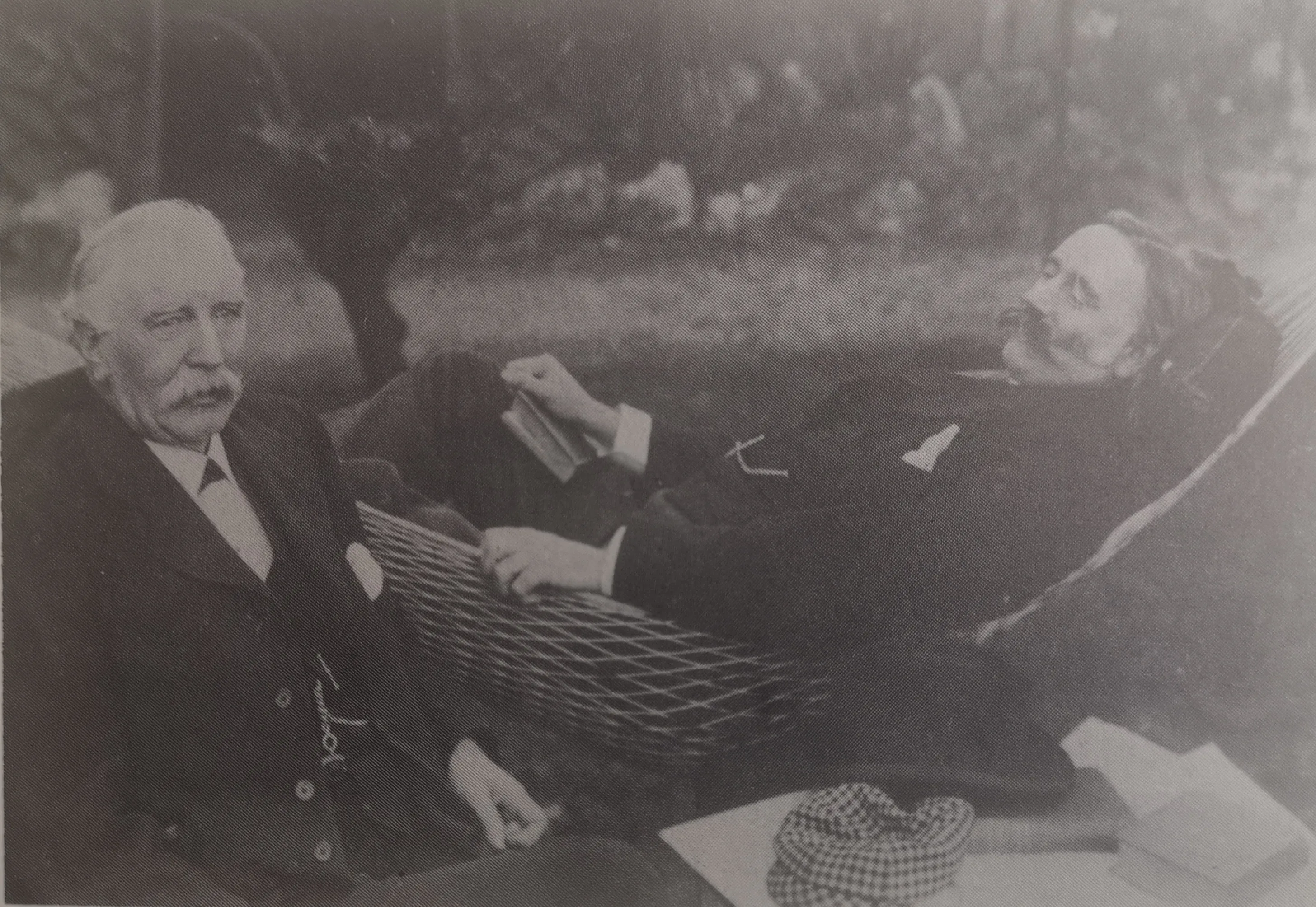
In addition to his regular pastoral and preaching labours his unflagging energy also found expression in other ways. He was a close friend of C.H. Spurgeon and he followed his lead in two matters. Spurgeon compiled his own hymnbook for use in the Metropolitan Tabernacles, and the Harcourt Street pastor also compiled a hymnbook, the Harcourt Hymnal. The publication of the book synchronized with the opening of the chapel, and it went through several editions, an enlarged edition being published after his death as “The Irish Baptist Hymnal”. The preface to the first edition shows that , despite his own strong and uncompromising theological convictions he could appreciate and was prepared to use what he found good in other schools of thought.
Certain sweet singers of ancient days are here brought into fellowship with those of modern date. Bernard, Watts, Cowper, Doddridge, Toplady, Addison, Newton and C. Wesley join in the utterance of praise with Kelly, Bonar, Denny, Deck, Faber, Havergal, Bliss and Crosby, and it is hoped that many, through the medium of this book may find the expression for the thanksgivings of grateful hearts unto the Triune God.
Spurgeon also founded a College for the training of young men for the Gospel ministry, and here too H.D.B. followed his lead. The Irish Baptist College occupied a large house next door to the chapel. It was controlled by a Committee fifty per cent of which was nominated by the church and the other fifty per cent by the Baptist Union of Ireland. Some of the students joined the church by transfer during their residence in Dublin and they were always a great help in its activities except when, as happened more than once, they took one of the lady members of the choir with them on their own departure from Dublin.
With the full programme to which he was committed in the church, his health, despite his fine physique, was not always at its best, and twice, for short periods, an Assistance Pastor was called in to share his burdens. One of these was Ambrose U.G. Burt, M.A., who later became pastor of the Brannockstown Church in Co. Kildare and Principal of the Irish Baptist College. Later still he went to Canada to become a judge. Another was J.W. Pearce , and Englishman who surrendered the Pastorate of the Limerick Church to come to Mr. Brown’s assistance and later returned there.
One other thing, which contributed much to the spiritual life of the church and also helped to awaken interest amongst those outside, was the number of evangelical preachers from across the water whom the Pastor invited over from time to time. This gave Dublin Christians the opportunity to hear outstanding men who might not otherwise have come their way. Amongst these visitors may be mentioned the two sons of C.H. Spurgeon, Thomas and Charles, F.B. Meyer, Frank White, Archibald Brown, and John Thomas of Liverpool. Every third year the Annual Assembly of the Union was held in Dublin, and Mr. Brown always arranged that one afternoon be kept free for a garden party which he gave in the Zoological Gardens in the Phoenix Park.
Daily Life
It is clear then that for many years the church was a veritable hive of industry, enjoying a large measure of Divine blessing. It would be wrong however to think that it lived in an atmosphere of continuous and unbroken revival. That it had its lean ears as well as its fruitful ones may be gathered from some words in the Annual Report for 1980:-
We are thankful to report tokens of the Lord’s blessing during the year of grace 1908. After long and prayerful waiting upon God the adverse tide has at last turned, and in spite of a very strict revision of the membership roll we can report and increase of twenty. Baptisms have been more frequent, while a very healthy and interested spirit of prayed has been manifested in the fellowship.
This last sentence is amplified a little further on in a reference to six new weekly prayer meetings which had been arranged to meet the emergency. Here is the unfailing secret of spiritual renewal.
And now, before we pass on to the next chapter in the history of the church – unfortunately a rather unhappy one – it is interesting to read in the Minute Book of the position that was taken in those years with regard to some problems of church practice which arise from time to time, even today.
The church had not been long formed when a letter was received from a candidate for church membership that stipulated that he could not join unless he was sure that only unfermented wine would be used at the Lord’s Table. The reply was that this assurance could not be given. On another occasion a demand was apparently made for the exclusion of a certain person, an adherent, from the Table. This was also refused on the ground that the church was an open communion church. There are also a couple of decisions recorded in the Minute Book prohibiting certain activities in some of the Young People’s meetings, whilst admitting at the same time that there was nothing objectionable in the activities if engaged in at other times in other places. Discipline and control were obviously more rigorously exercised then than now.
WWI and Beyond
In 1914 the first World War broke out, and 45 young men from Harcourt Street Church joined the forces. One was killed on active service, Llewylin Macdougald, who had been the church’s organist for some years. It was in November of that year that Mr. Brown wrote this letter:-
My loved Friends,
Thirty years ago exactly the church invited me to become your Pastor, and, with much consciousness of shortcoming and failure, having obtained help of God, I continue unto this day, and anything accomplished has been due to sovereign grace alone and the sympathetic co-operation and prayerfulness of a great cloud of witnesses now in Heaven, and its godly successors in you also.
An eminent Dublin physician has told me that if I wasn’t to avoid a succession of breakdowns it is imperative to find a ‘curate’ and accordingly I leave this matter to your kindly hearts, praying that the Holy Ghost Himself guide and impulse your decisions. Surely He will, especially as so many are already waiting on the Father in earnest and believing prayer. I will gladly contribute at least £100, and if need be, a larger sum, toward the salary of this Assistant Minister.
The church meeting at which this letter was read decided to invite Pastor Gracey of the Cork Church to come to Dublin as Assistant to Mr. Brown, but he did not feel that that was God’s will for him. Very shortly afterwards Mr. Brown himself suggested that Pastor T.S. Metrustry of Londonderry should be asked if he would come. An invitation was accordingly extended to him and was accepted. At the expiration of the twelve months he was most heartily and earnestly invited to continue, and he agreed to remain on until at least March 1918.
Disunity
It was now that the first serious friction disturbed the harmony of the church. Disagreement arose over the placing of a contract for the repair of the roof of the chapel and the installation of electric light. This led to some resignations, but regrettably, it was followed almost immediately by much more serious trouble. To enlarge upon this would not serve any useful purpose. Details of the grounds of difference are not given in the church’s Minute Book, but from what is recorded it would seem that before very long the spirit of Corinthian partisanship infected the membership. Some got the impression that Mr. Brown as the Senior Minister was not being given his proper place, whilst others were equally convinced that Mr. Metrustry was not being allowed the freedom of action which he should have. The upshot of the unhappy dispute was Mr. Brown’s resignation from the church towards the end of 1917. Not long afterwards the illness from which he had suffered for over two and a half years took a more serious turn and he died in the Spring of 1918. Mr Metrustry remained in office until March of that year as he had promised, but declined an invitation to continue longer.
Louis E. Deens
The next few years were a very unsettled time for the church. At a meeting of the members in March 1919, after a vacancy of a full year, it was unanimously agreed to call Mr J.C. Rendall M.A., a Scotsman, an ex-padre to the forces. He accepted the call, but after only eight months he reigned the Pastorate, explaining that he was convinced that the church required a type of ministry very different from his. In May 1921, after another full year without a Pastor, Mr J. Pearson Harrison, an Australian pastor then settles in England was called, and he accepted, but his term of office was also brief. He left in early 1924. Another year elapsed before the next effort was made to fill the vacancy In February 1925 a church meeting was convened to consider the matter of the vacant pastorate. It was attended by only thirty-nine members, roughly one tenth of the number then on the roll, evidence in itself of the sad state into which the church had come. The question as to whether another attempt should be made to secure a pastor was first discussed, and it was decided, but only by a majority vote, that the effort should be made. That having been settled four names were put to the meeting, and it was decided that Mr. L.E. Deens, the pastor of the Cliftonpark Avenue Baptist Church in Belfast, should be invited to become the pastor. He was a Dublin man himself, a graduate of the Baptist College there, with twelve year’s pastoral experience, six in a southern church and six in a northern one. He was also a personal friend of many of the Harcourt Street members. He hesitated to accept the call, indeed he definitely decline it, probably remembering that a prophet is not without honour save in his own country. Pressure was put upon him to reconsider the decision, and ultimately it was agreed that he should go to Dublin for an experimental period of twelve months, a final decision to be deferred fort the present. Before the expiration of that period he was unanimously invited to continue his ministry, and he remained for a further thirty-seven and a half years!
Rebuilding
The immediate task awaiting him was one of re-building. After those years of wonderful blessing the church was almost back to where it started. A membership of thirty invited Mr. Brown to Lower Abbey Street, thirty-nine foundation members signed the Constitution at the first church meeting in the Harcourt Street chapel, and now it was a poorly attended church meeting of only thirty-nine which had called the new man. Actually there were almost three hundred names still on the church roll, survivors of the disruptions of the past few years. The first job was to find out where exactly each of these stood, and every one of them was visited at least once a year during the first three years of the new pastorate. A drastic revision of the roll was then undertaken which reduced the number to slightly over one hundred. The years that followed were on the whole uneventful. The usual activities of an evangelical church were all maintained, the Sunday morning worship service, a Sunday evening Gospel meeting, open air meetings, one or more weekly prayer meetings, Sunday School for the children, two Christian Endeavour Societies, two weekly women’s meetings, a missionary work party, occasional Gospel missions, one conducted by the Pastor himself and others by well known preachers from England such as E.W. Mills, Godfrey Robinson, John Pritchard, and Alan Redpath. Two high days in the church’s annual calendar were the Full Attendance Sunday, followed later in the week by Thanksgiving Day. These were always well supported by the members, the latter indeed providing a substantial part of the church’s annual income. For the children there were always two Christmas parties, complete with Santa Claus and Christmas tree. To one of these parties some disadvantaged children from a local institution were always invited. There were times when the going was hard, times when dwindling attendances and apparent spiritual lukewarmness gave rise to discouragement and almost alarm, but there was always a core of dedicated men and women who believed in plodding on and praying through, and the state of the church today shows that their faith and hope were fully justified.
Membership
Here are some statistics which indicate the fluctuating fortunes of the church over the closing years in Harcourt Street and the opening years in Grosvenor. In 1940 the number on the roll was 121. In 1942 it had fallen to 101. In 1948 it was down to 98 and in 1950 it had fallen still further to 84. The declension would seem to have reached rock bottom then. In 1953 there was a slight rise to 88. In 190 it had reached 96, in 1961 it stood at 107, and in 1963 when Pastor Deens retired and Pastor Judd succeeded him it had reached 110. The progress continued under the new Pastor. In 1969 the members numbered 150, in 1976 it was 145, and according to this year’s Assembly Handbook, it is now 146.
Some of the things that happened during the later years in Harcourt Street were of special interest at the time, and may be worth recalling. Four young men from the church went out into whole time Christian service. H.D. Macdonald, who had graduated from the College, continued his studies, earned a Doctorate in Divinity, and became Vice-Principal of the London Bible College, was baptized and married in the church. Desmond Jackson served over twenty years in one pastorate in London before his early death. G.E. Towson found his sphere in pastorates in Scotland, and Eric Humphries, who graduated from Trinity College, spent many years as a Christian teacher in Africa, both West and East.
Special services were held in 1937 to mark the silver jubilee of the church, and the Tercentenary of the coming of Baptists to Ireland was similarly marked in 1944. A service which attracted wide public attention was one in 1934. Mr. W. McDowell, a distinguished citizen of the United States, had been appointed Ambassador to the Irish Free State as it was then, but he had only been three weeks in Dublin when he died suddenly at a banquet in Dublin Castle. He was a Baptist, and the American Embassy asked for a funeral service to be held in the chapel. They decorated the auditorium with flowers and evergreens, and a large United States flag was suspended in front of the platform. The service was conducted by the Pastor, assisted by Principal T.H. Spurgeon, M.A., B.D. The chapel was filled for the occasion. Diplomatic representatives of nine countries, and many church dignitaries from other denominations, signed the attendance Book. The service was fully and widely reported in the Press, with several photographs of the prominent members of the congregation taken as they were leaving the chapel.
The Migration
In the second half of the nineteen thirties it became clear that the church was suffering all the disadvantages of being a downtown one. Members who resided in the suburbs were less willing to travel to it, and visitors were fewer. Recognizing this, the thoughts of the Pastor and some of the office-bearers turned towards a building in the Rathgar district known as Grosvenor Hall. This was a really fine church building, occupied at that time by a dwindling group of Brethren. It had been built by British Baptists some years before the Harcourt Street building was erected, in the hope that it would reach and serve a public not then touched by the Lower Abbey Street Church. That hope had not been realized, and the building passed, first, into the hands of an evangelical interdenominational body, and later to the assembly of Brethren which was now facing extinction. The Pastor and Church Secretary discussed the possibility and the advisability of acquiring the Hall, but agreed that no move should be made until it became clearer that no move should be made until it became clearer that it would be in the will of God. This was about 1935, and three years later an adherent phoned the Pastor to let him know that the Hall was up for sale, and that, already another religious body in the city had made an offer for it. Immediate steps were taken to get in touch with the vendors. They confirmed what the Pastor had been told. When they learned that the Baptists might consider purchasing the building they said they would prefer to sell to them, but there was a stipulation in their Trust Deeds which they must observe. It laid down that if the Hall were ever sold it must be to the highest bidder. They disclosed what the others had offered, the Harcourt representatives immediately offered £500 more, subject to subsequent confirmation by the church, and the offer was accepted there and then. The church’s approval was forthcoming in due time, only one member objecting.
Everything seemed to be settled, but the dissentient, an elderly man, and one of the foundation members of the church, announced that he would have recourse to the law to prevent the sale of the Harcourt Street chapel. In Some alarm the Trust Deed governing the chapel was re-examined. It was found that the Deed explicitly allowed the church to sell the building if for any reason it was considered wise to do so, but again on one condition. This was that the proceeds of the sale must be devoted to the provision of another Baptist place of worship within the boundary of the City of Dublin. Now the interesting point about this is, that in 1935, when the wisdom of making the move was first mooted, Grosvenor Hall was outside the City boundary. The move could not have been legally made at that time, but in the interval since then the City of Dublin had been extended and the purchase of the Hall was now quite legitimate. Not unreasonably the members took this as encouraging evidence that they were following the Divine leading in making the change.
Grosvenor Road Baptist Church
The decision to purchase was made in 1938 but it was 1942 before the removal took place. It was found difficult to get a purchaser for the chapel, and it was considered wiser to continue to occupy it rather than leave it vacant. The opening services in the Grosvenor Road Baptist Church, the name given to the new building, were held in 1942, and the church had passed another milestone in its journey. The name was different but it was the same church.
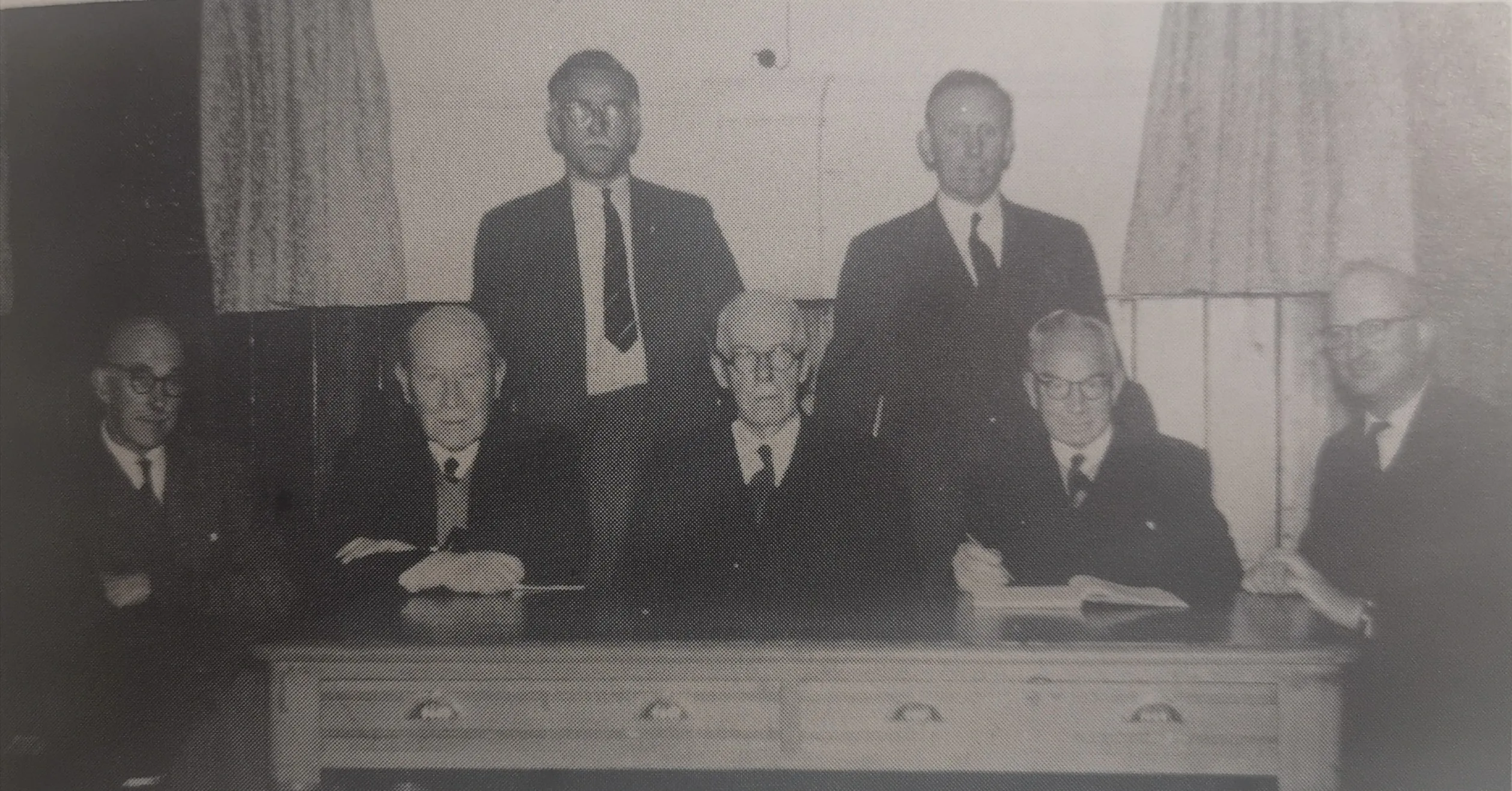
Officebearers 1961
Back row: Mr Alex Burgess, Mr George Edge
Front Row: Mr Sam Gill, Principal T H Spurgeon (Elder), Pastor Deens, Mr Francis Ryder (Elder and Church Secretary), Mr Jack Richardson
Mr. Deens continued in the Pastorate for another 21 years, retiring in September 1963. The work of the church continued much as in Harcourt Street. A good deal of attention was given to the young people and this paid dividends. One of the office-bearers placed a field at their disposal where hockey was played every Saturday afternoon during the winter. Another member opened his tennis court to them during the summer months. Gospel missions were held every four or five years because it was found that even when these did not issue in conversations amongst outsiders they were useful in bringing many of the young people around the church to decision for Christ. Several of these young people have continued as loyal and active members of the church to this day. Experiments were made in new methods of evangelism. On one Sunday evening each month during the winter the Pastor preached on some more or less controversial subject such as Christian Science, Spiritualism, Evolution, treating the subject from the Christian standpoint. At the close of the service all who were interested were invited to adjourn to the church hall where there was a free for all discussion, the Pastor presiding and summing up at the end. Something similar was attempted at a monthly meeting which was held on a weeknight in a room rented in a city café. Here there were no hymns or prayers or scripture readings, but the subject for discussion, whatever it was, always allowed for the Gospel to be brought in and pressed home. The help of prominent Christian citizens was enlisted to chair these discussions and several were interested in the venture and gladly co-operated. In these ways contact was made with many who would not otherwise have been reached, but it must be acknowledged that it is not known that anybody professed conversion or sought baptism or church membership as a result of them.
It was quite a big event in the church’s history when a pipe organ was first installed in 1950.
The organ had ben donated to the Waterford Protestant Hall many years previously but had been practically never used there. The committee of the hall was anxious to dispose of it for use in Christian work elsewhere, and they let the church have it for a nominal sum. It was dismantled in Waterford and transferred to Dublin by two members of the church accompanied by a local organ builder who subsequently reconditioned it and rebuilt it in Grosvenor Road. It has since been considerably extended. Naturally organist, choir, and congregation were all glad when it was ready to replace the American organ previously in use. Certainly it greatly enriched the musical part of the services.
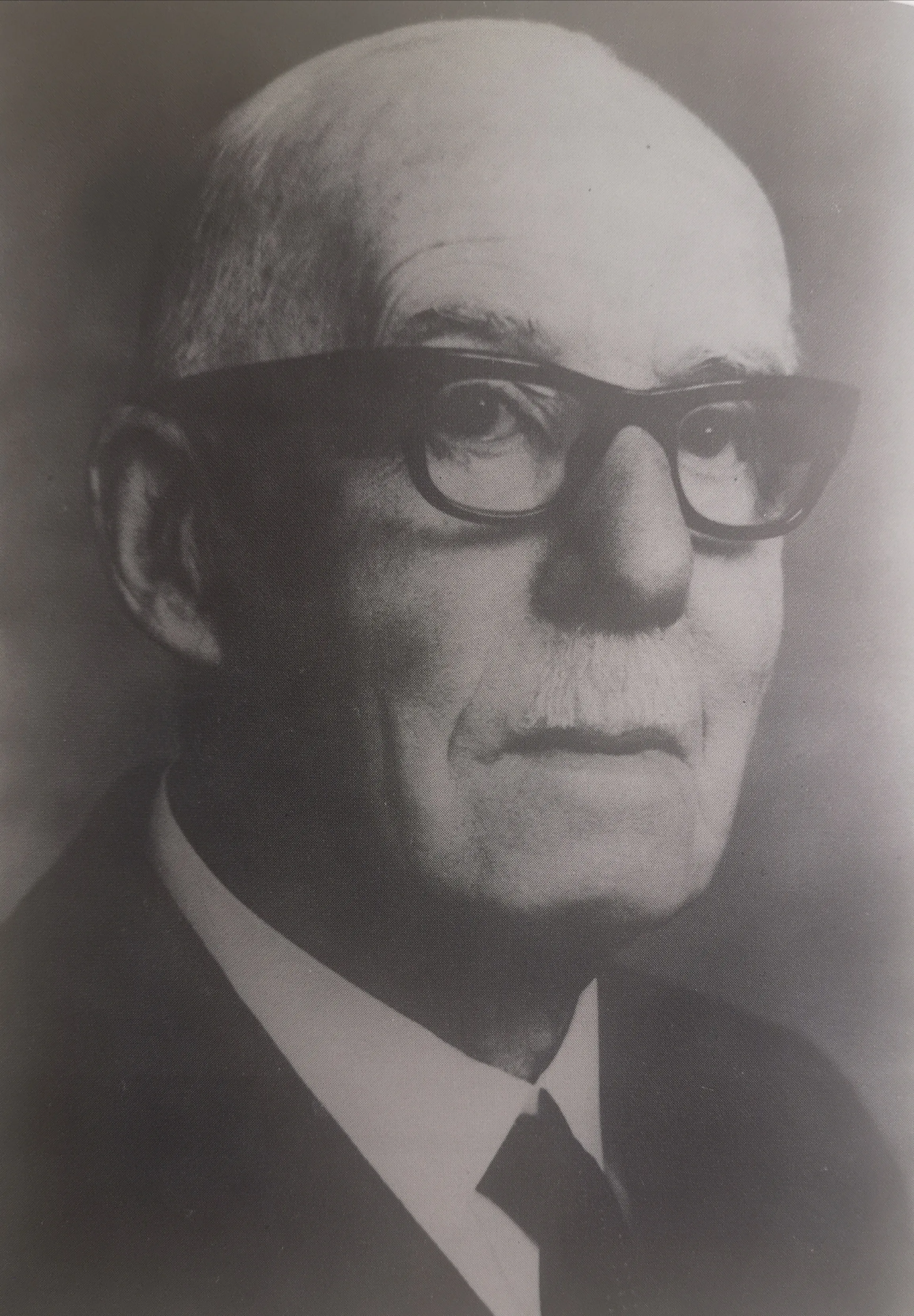
Mr. Deens resigned the Pastorate in 1963 having given nine months notice of his intention to do so. Happily there was no long interval before the church succeeded in finding a successor. Pastor Alec Judd, B.D., had already been called and had accepted the call and he was ready to take over immediately. He was a graduate of London Bible College, still in his first pastorate in Woodstock Road, Oxford. He remained twelve years during which the church continued to grow, as is shown by the statistics already quoted. He left to take up a challenging vacancy in Toxteth, Liverpool. He was followed by Pastor Archibald Macmillan, B.D., a Scotsman, whose first pastorate was in the Shetland Islands. He is now happily and acceptably settled and acclimatised. These two ministries, one quite recent and one current, must await another chronicler to bring this story up to date.